
In 2025, many CCTS authors make outstanding contributions to our journal. Their articles published with us have received very well feedback in the field and stimulate a lot of discussions and new insights among the peers.
Hereby, we would like to highlight some of our outstanding authors who have been making immense efforts in their research fields, with a brief interview of their unique perspective and insightful view as authors.
Outstanding Authors (2025)
Scarlett Tohme, Northwell Health, USA
Hirohisa Kato, Okitama Public General Hospital, Japan
Kyle Miletic, Henry Ford Hospital, USA
Steven J. Chen, Hospital of the University of Pennsylvania, USA
Vladislav Muldiiarov, Norton Thoracic Institute, USA
Alessio Campisi, Thoraxklinik, Heidelberg University Hospital, Germany
Massimiliano Bassi, Sapienza University of Rome, Italy
Pablo Luis Paglialunga, University of Barcelona, Spain
Outstanding Author
Scarlett Tohme
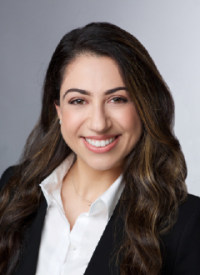
Scarlett Tohme, MD, MS, is an integrated cardiothoracic surgery resident at Northwell Health in Long Island, New York. She completed her undergraduate studies at Columbia University, graduate studies at Georgetown University and obtained her medical degree at New York Medical College before beginning residency. As a cardiothoracic resident, she has been immersing herself in the training with an outstanding thoracic surgery team under the directorship and mentorship of Dr. Paul C. Lee, MD, who has curated a robust and diverse department of open, minimally invasive, and robotic lung and foregut surgery. While her main career interests are adult cardiac surgery, Dr. Tohme holds a great appreciation and interest in complex lung cancer cases, always eager to learn from her mentors to apply the knowledge gained to every aspect of her practice as a resident and future cardiothoracic surgeon. Connect with her on LinkedIn.
The way Dr. Tohme sees it, academic literature is one of the most important aspects of medicine that allows clinicians and researchers across the globe to communicate ideas, practices, and most importantly, the door to advancing medicine. To achieve these ideals, a good academic paper must provide reproducible and evidence-based data and conclusions that encourage intellectual and productive conversations among professionals. In addition, a paper should provide an impact of changing practice to provide patients more efficient and safer treatment options by incorporating the multidisciplinary efforts of various specialties and advancements in basic and translational research.
In Dr. Tohme’s opinion, there are many questions being developed during the process of academic writing, and it is easy to lose sight of the main goal of writing the paper. She adds, “I have been taught and am teaching my own mentees to stay organized and focus on answering the main inquiry in a concise manner that allows any readers to be able to follow and apply the data and views to their own practice.”
“Every step of academic writing is a valuable learning opportunity for everyone involved. It also allows for personal and professional growth, allowing anyone who writes or reads academic literature to go beyond their potential to be an active member of society and help others. It is also an amazing vehicle to bring together like-minded individuals from around the world to collaborate with each other, bringing forth different perspectives and diversity to the advancement in the field of medicine,” says Dr. Tohme.
(by Brad Li, Masaki Lo)
Hirohisa Kato

Dr. Hirohisa Kato received his MD and PhD degrees from the Faculty of Medicine, Yamagata University, Japan. After his residency of general surgery, cardiovascular surgery, and thoracic surgery, he became an assistant professor at the Department of Surgery 2 in the Faculty of Medicine at Yamagata University, Japan. He also learned various surgical techniques at the Department of Thoracic Surgery, University of Hospital, Strasbourg, France, with a fellowship from The Japanese Association for Thoracic Surgery. He has worked at the Department of Thoracic Surgery, Okitama Public General Hospital since June 2020. His research interests include minimally invasive surgery, thoracoscopic sublobar resections, thoracoscopic segmentectomy, and small-sized lung cancer. Follow him on ResearchGate and LinkedIn.
In Dr. Kato’s opinion, it is essential that authors follow journal’s regulations. It is also crucial to simply describe the methods and try to accurately report the message to the readers. Most important of all, authors should provide novelties when submitting manuscripts. It would be even better if the content is of interest to the readers. In case reports, a clinical course should be clearly and precisely described. An original article should be described using appropriate statistical methods. In clinical trials, authors should show coordination with co-authors in addition of the above.
Dr. Kato believes that it is natural to have biases in analyzing surgical data as each patient has individual characteristics. Surgeons can try to unify the surgical techniques and skills. In order to avoid these biases, the provided techniques should be simplified and easily accepted by any surgeons when the proposed techniques would be reported.
“While surgeons have always performed surgery based on evidence concerning disorders, they have to perform surgery with questions in view of poor evidence. I therefore believe that such questions should be solved with academic research, and the process and resolution of that academic research are the greatest motivation for surgeons and researchers,” says Dr. Kato.
(by Brad Li, Masaki Lo)
Kyle Miletic

Dr. Kyle Miletic is a cardiac surgeon at Henry Ford Hospital in Detroit, Michigan, specializing in complex aortic surgery, heart and lung transplantation, and mechanical circulatory support. He earned his medical degree from Wayne State University and completed his thoracic and cardiovascular surgery residency at the Cleveland Clinic. At Henry Ford, Dr. Miletic serves as Senior Staff Surgeon and Co-Director of the Comprehensive Aortic Center. He performed Michigan’s first beating-heart transplant and continues to advance innovation in surgical techniques and patient care. His academic interests include optimizing outcomes in aortic surgery, mechanical circulatory support, and surgical education. Learn more about him here.
CCTS: What are the most commonly encountered difficulties in academic writing?
Dr. Miletic: One of the greatest challenges is translating complex clinical experiences and data into a narrative that is both rigorous and accessible. In medicine, we often deal with heterogeneous patient populations and multifactorial outcomes, which makes drawing clear conclusions difficult. Balancing scientific precision with clarity takes discipline. Another challenge is editing manuscripts written in part by residents and fellows, who may not yet have the full context or depth of understanding of the study. While this process is an important part of their education, it often requires substantial revision to align the manuscript with the intended scientific message. Time is another persistent obstacle. I always feel clinical responsibilities and teaching being more urgent, so writing can easily fall behind. Finally, collaboration across multiple authors can be demanding, as aligning perspectives, revisions, and deadlines requires persistence and diplomacy.
CCTS: The burden of being a scientist/doctor is heavy. How do you allocate time to write papers?
Dr. Miletic: Writing requires intentional carving out of protected time. I treat it like an operation on my schedule. It gets blocked, prioritized, and respected. I often use early mornings or quieter weekends to focus when distractions are minimal. I also keep a running list of ideas and fragments from the operating room, teaching sessions, or clinical encounters on a white board in my office. By the time I sit down, I’m not starting from scratch. Often, I already have the seeds of a paper ready to shape.
CCTS: What is fascinating about academic writing?
Dr. Miletic: What fascinates me most is that writing is a way of making ideas permanent. Surgery is immediate and tangible, but academic writing ensures that the lessons learned, the innovations developed, and even the failures are preserved for others to build upon. I also find it rewarding that a single paper can ripple outward. It might end up guiding a colleague’s approach in another hospital, informing a trainee’s education, or even contributing to the evidence that shapes guidelines. Writing bridges the very personal world of the operating room with the broader scientific community, and that sense of continuity is deeply motivating.
(by Brad Li, Masaki Lo)
Steven J. Chen

Steven J. Chen, MD, is an internal medicine resident at the Hospital of the University of Pennsylvania in Philadelphia, PA. He earned his undergraduate degree in Chemistry from Swarthmore College and his medical degree from the Renaissance School of Medicine at Stony Brook University. Prior to medical school, Dr. Chen conducted biomedical research at the Vaccine Research Center at the National Institute of Allergy and Infectious Diseases, contributing to vaccine development for HIV-1, human metapneumovirus, and Lassa virus. His current research interests lie at the intersection of cardiology and medical imaging, focusing on how imaging studies and ultrasound can enhance diagnostic precision and guide patient care. He is particularly interested in integrating clinical data and imaging insights to advance evidence-based medicine and improve outcomes for patients with cardiovascular disease. Follow him on LinkedIn and Google Scholar.
CCTS: What are the most commonly encountered difficulties in academic writing?
Dr. Chen: I think one of the biggest challenges in academic writing is ensuring that your study is truly novel. Regardless of what field you are in, it takes time to really understand what has been done, and more importantly, what is missing or preventing patients from getting care they need. As you gain more clinical exposure and training, it becomes easier to recognize meaningful gaps worth exploring. Another challenge is designing a strong study from the start. Having a clear hypothesis – one that is interesting whether it turns out to be true or false – is incredibly important, because it shapes the entire project, conclusions, and framework for pursuing future studies. It’s easy to move forward with a study before that foundation is fully developed, but doing so often makes it harder to write an engaging and impactful paper. The best studies are thoughtfully designed, address a real clinical need, and provide findings that can inform care for future patients.
CCTS: The burden of being a scientist/doctor is heavy. How do you allocate time to write papers?
Dr. Chen: I really like the proverb, “Little by little, a little becomes a lot”. As a physician, it can be rare to find a long, uninterrupted stretch of time to write. If I only wait for those perfect blocks of time, I often find that weeks or months can pass before I’ve made any real progress on a paper. Instead, I try to work on a manuscript bit by bit whenever I have time. Even short writing sessions help keep the ideas fresh and make it easier to pick up where I left off. I personally find this approach more productive than coming back to a project after a long break and having to remind myself of what I was thinking the last time I worked on it. This way, the key points of the project are always active in my mind, and when a larger block of time does come along, I already have the momentum I need to finish the paper.
CCTS: What is fascinating about academic writing?
Dr. Chen: In some ways, I think academic writing is a lot like being a salesperson. It’s such an important skill to develop – because what if you’ve made a groundbreaking discovery but can’t get anyone interested in it? Ultimately, you’re trying to convince others that your work matters. It’s fascinating that research findings are typically objective and concrete, yet the way we communicate them can vary tremendously. It’s rewarding, both as a writer and as a reader, to see how thoughtful framing and clear communication can completely change how research is understood and appreciated. When we share our ideas in a way that connects with what matters to someone, they pay attention. In the end, that’s the goal of academic writing – to make sure that our discoveries are seen, shared, and ultimately used to improve patient care.
(by Brad Li, Masaki Lo)
Vladislav Muldiiarov

Vladislav Muldiiarov, MD, is a postdoctoral research fellow at the Norton Thoracic Institute, CommonSpirit Health in Phoenix, and a former Instructor in Acute Care Surgery at the University of Nebraska Medical Center. He earned his MD at Siberian State Medical University in Tomsk, Russia, and trained in orthopedic trauma. His work brings together chest trauma, rib fracture care, and perioperative outcomes with pediatric orthopedics and spine deformity, connecting bedside realities with careful analysis. His aim is simple and ambitious at once: to turn rigorous data into clear, workable steps that help trauma and lung transplant patients recover faster and more safely. Follow him on LinkedIn and ResearchGate.
CCTS: What is the key skill sets of an author?
Dr. Muldiiarov: For me, strong writing begins with curiosity supported by discipline. Curiosity helps me spot the question worth asking, and discipline turns it into a complete study rather than an unfinished draft. I also rely on collaboration, inviting colleagues who see the problem from different angles and asking for early critique. This multidisciplinary input strengthens both the argument and the methods. Above all, clarity and accuracy hold everything together. My goal is a manuscript that makes complex ideas easy to grasp without oversimplifying; if a clinician can read it once and take away the main point, I have done my job.
CCTS: How to avoid biases in one’s writing?
Dr. Muldiiarov: To keep my writing free of bias, I begin with a clear protocol. I predefine the primary and secondary outcomes before I look at the data, which keeps me from quietly changing the rules after the fact. I also lean on reporting checklists such as CONSORT, STROBE, and PRISMA. They are memory aids that help me catch common pitfalls and make my methods and results easier to verify. I report what I find rather than what I hope to find, including negative and neutral results. Finally, I state limitations and any conflicts of interest in plain language. Naming the constraints does not weaken the work. It builds trust and lets readers judge the evidence on fair terms.
CCTS: Academic writing takes a lot of time and effort. What motivates you to do so?
Dr. Muldiiarov: I think the most motivating part of academic writing is realizing that you have contributed to the practical work of others. When a study helps someone reconsider an old routine and refine their approach, the time invested is worthwhile. Readers and students value timely, trustworthy information, and we feel responsible for what we offer them.
(by Brad Li, Masaki Lo)
Alessio Campisi

Dr. Alessio Campisi is a thoracic surgeon and research fellow at the Thoraxklinik, Heidelberg University Hospital, Germany, specializing in robotic-assisted thoracic surgery, minimally invasive lung cancer resections, airway surgery, and digital surgical planning. He earned his medical degree and specialization with honors from the University of Bologna, complemented by international training at Shanghai Chest Hospital and Poznan University of Medical Sciences. Dr. Campisi has served as Consultant Thoracic Surgeon at GB Morgagni-L. Pierantoni Hospital in Forlì, University Hospital Verona, and Pederzoli Hospital in Peschiera del Garda, Italy, and completed advanced training through the ESTS Robotic School in Heidelberg. His academic interests focus on innovation in minimally invasive surgery, with a special interest in the robotic approach, lung resections, airway surgery, and perioperative outcomes optimization. Connect with him on LinkedIn.
In Dr. Campisi’s view, strong scientific writing begins with clinical curiosity and a disciplined methodological approach. The ability to identify real knowledge gaps, structure a robust study design, and clearly communicate both results and limitations is essential. Collaboration and multidisciplinary exchange often enrich the work and broaden its relevance.
Dr. Campisi believes that transparency and methodological rigor are crucial to avoiding biases. Authors should predefine outcomes and include negative results. Authors should also use standardized reporting frameworks, clearly state limitations, and separate data from interpretation. In scientific writing, it is nearly impossible to eliminate all biases; however, it is essential to recognize them, clearly document their potential influence, and minimize them as much as possible. Honest and balanced reporting helps ensure credibility, reproducibility, and true scientific value.
“Academic writing allows me to continuously question my clinical practice, stay updated, and deepen my knowledge. I often choose to write about topics that raise real dilemmas in daily surgical decision-making, where the literature does not always provide clear or consistent answers. By exploring these uncertainties, I can not only improve my own understanding and confidence in patient management but also provide practical insights for colleagues who may face similar doubts,” says Dr. Campisi, “Academic writing also transforms individual clinical experience into shared knowledge, fostering collaboration and innovation in our field. It creates a lasting impact beyond personal practice and helps bridge research, technology, and surgical decision-making. The process is challenging, but the possibility of advancing our discipline and contributing to better patient care makes it deeply meaningful and rewarding.”
(by Brad Li, Masaki Lo)
Massimiliano Bassi

Massimiliano Bassi, MD, PhD, is an Assistant Professor in Thoracic Surgery at Sapienza University of Rome, Department of General Surgery and Surgical Specialties, Thoracic Surgery Unit. He obtained his medical degree cum laude in 2015 and completed his residency in Thoracic Surgery with honors in 2021 at Policlinico Umberto I Hospital, Rome. During his training, he was an observer at NYU Langone Hospital (New York, USA) with a focus on robotic-assisted thoracic surgery and later participated in the International Training Program at Shanghai Pulmonary Hospital (China) with a focus on minimal invasive pulmonary resection. He completed his PhD in cardio-thoraco-vascular imaging in 2025. He is the author or co-author of over 50 peer-reviewed articles and four books. His research interests include lung cancer, lung transplantation, esophageal surgery, and minimally invasive techniques.
In Dr. Bassi’s opinion, difficulties in academic writing are numerous and multifaceted. First, the choice of topic should reflect one’s area of expertise while also addressing the interests of the readership. Another major challenge is organizing and analyzing complex data in order to obtain meaningful and reliable results. Finally, scientific findings must be translated into a clear and coherent narrative, maintaining methodological rigor while ensuring readability and responding effectively to peer-review comments. Time constraints and the need to balance clinical duties with research activities represent additional significant challenges.
As Dr. Bassi’s surgical career progresses, the time available for academic writing continues to decrease. He therefore tries to allocate dedicated and protected time slots for writing, often after surgical sessions or during weekends. Setting realistic milestones and working consistently, even in short but focused sessions, enables him to integrate academic writing into an otherwise demanding clinical schedule.
“I believe that sharing clinical experience and analyzing large clinical datasets to derive meaningful outcomes is the only way to transform individual experience and research findings into shared knowledge. Academic writing promotes continuous dialogue within the scientific community and ultimately contributes to improving patient care through evidence-based practice. Although medicine is not an exact science, it is deeply rooted in scientific principles, combining evidence-based knowledge with personal skills, experience, personality, art and clinical judgment to address individual patient needs,” says Dr. Bassi.
(by Brad Li, Masaki Lo)
Pablo Luis Paglialunga

Pablo Luis Paglialunga, MD, MSc, PhD, is a thoracic surgeon based in Barcelona, Spain. He holds a Master’s degree in Advanced Medical Competencies and a PhD in Medicine and Translational Research from the University of Barcelona. His doctoral thesis, awarded Excellent Cum Laude and supervised by Dr. Laureano Molins, focused on the implementation of robotic surgical systems in thoracic surgery. In addition to his surgical practice, he has a strong academic profile and is actively involved in thoracic surgery education and training. His clinical and research interests include minimally invasive and robotic thoracic surgery, learning curves and outcomes in robotic lung resections, airway surgery, and chest wall pathology. Dr. Paglialunga is committed to advancing surgical innovation and translational research, with particular emphasis on the integration of robotic systems and novel techniques into clinical practice. Follow him on LinkedIn and Instagram.
CCTS: What are the key skill sets of an author?
Dr. Paglialunga: In my opinion, a good academic author must combine several complementary skills. First, critical thinking is essential: the ability to analyze data objectively, question assumptions, and place results within the broader scientific context. Second, methodological rigor is fundamental to ensure that conclusions are solid and reproducible. Clear and concise communication is another key skill. Even high-quality research can lose impact if the message is not well structured or accessible to the readers. Finally, perseverance and openness to feedback are crucial. Scientific writing is a process that often involves revisions, peer review, and constructive criticism, and the ability to learn from this process ultimately improves both the manuscript and the author.
CCTS: How to avoid biases in one’s writing?
Dr. Paglialunga: Avoiding bias starts at the study design stage, long before writing begins. Clear research questions, predefined endpoints, and transparent methodology help reduce unconscious bias. During writing, it is important to present results honestly, including negative or unexpected findings, rather than selectively emphasizing favorable outcomes.
I also believe that acknowledging limitations is a strength, not a weakness. Explicitly discussing potential sources of bias allows readers to better interpret the results. Finally, collaboration and peer review play a key role: discussing the manuscript with colleagues from different backgrounds often helps identify blind spots and improves the objectivity and balance of the final text.
CCTS: Academic writing takes a lot of time and effort. What motivates you to do so?
Dr. Paglialunga: My main motivation is the possibility of contributing to collective knowledge and improving patient care. Academic writing allows clinical experience to be transformed into shared evidence that can benefit other surgeons and, ultimately, patients.
In a rapidly evolving field such as thoracic surgery—especially with the expansion of minimally invasive and robotic techniques—publishing data is essential to guide safe implementation and informed decision-making. On a personal level, writing also encourages critical reflection on daily practice and fosters continuous learning. Being part of the scientific dialogue with colleagues worldwide is both intellectually stimulating and professionally rewarding.
(by Brad Li, Masaki Lo)