
In 2026, many CCTS authors make outstanding contributions to our journal. Their articles published with us have received very well feedback in the field and stimulate a lot of discussions and new insights among the peers.
Hereby, we would like to highlight some of our outstanding authors who have been making immense efforts in their research fields, with a brief interview of their unique perspective and insightful view as authors.
Outstanding Authors (2026)
Dario Familiari, University of Messina, Italy
Wolfgang Jungraithmayr, University Medicine Rostock, Germany
Ricardo Taipe Mallqui, Hospital Nacional Guillermo Almenara Irigoyen (HNGAI), Peru
Outstanding Author
Dario Familiari

Dario Familiari, MD, PhD, is the Deputy Director of Thoracic Surgery at the University of Messina, Italy. He obtained his medical degree cum laude in 1999 and completed his residency in Thoracic Surgery with honors in 2004 at Policlinico “G. Martino” Hospital, Messina. During his training, he completed an international fellowship at Reina Sofía Hospital in Córdoba, Spain, with a focus on video-assisted thoracic surgery (VATS). In 2019, he undertook further advanced training in thoracic surgery at Wythenshawe Hospital in Manchester, United Kingdom. Dr. Familiari is the author or co-author of more than 75 peer-reviewed scientific publications. His main research interests include lung and pleural malignancies, minimally invasive thoracic surgery, and the surgical and endoscopic management of airway diseases.
To ensure one’s writing is critical, Dr. Familiari believes that a thorough understanding of the topic being addressed, coupled with data from the international literature, is essential. To him, developing the writing in this manner leads to realistic and reliable results that can meaningfully contribute to the scientific community. It is also essential to avoid Conflict of Interest (COI) that could undermine the credibility of the paper.
Disclosing COIs, on the other hand, is equally important. It allows readers to properly evaluate the paper and assess whether the authors may have been influenced in their statements—particularly in areas where the literature is complex or difficult to interpret. Transparent disclosure of COIs helps readers understand how such interests might tilt the conclusions one way or another, thereby reducing the risk of incorrect information being passed on to the scientific community and knowledge users.
“Clinical and surgical practice takes up a lot of time, but the desire to contribute to collective knowledge and share my experience and my research pushes me to carve out some time to dedicate to academic writing. Writing also encourages critical reflection on daily practice and promotes continuous learning,” says Dr. Familiari.
(Brad Li, Masaki Lo)
Wolfgang Jungraithmayr
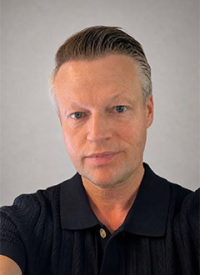
Dr. Wolfgang Jungraithmayr, MD, PhD, is the Chair of Thoracic Surgery at University Medicine Rostock, Germany. He received specialized training in general thoracic surgery and lung transplantation at the University Hospital Zurich, Switzerland, followed by fellowships at Odense University Hospital in Denmark and at Massachusetts General Hospital in Boston, USA. After obtaining his MD degree in 2000, he received his PhD from the University and ETH Zurich in 2010. At University Rostock, he is leading research groups in tumor and transplantation research. His team employs mouse models of lung cancer and the mouse model of orthotopic lung transplantation that Dr. Jungraithmayr introduced for the first time. The mouse model of lung transplantation offers significant potential through its strong cross-departmental applicability, making it a powerful tool for addressing key research questions in transplant and tumor immunology. By giving mouse lung transplant courses, His group has taught the transplant model for many years to international research groups around the world. The focus of his current tumor research is to find new therapeutic strategies against lung cancer. His team has identified the molecule CD26 to be overexpressed in lung adenocarcinomas thus making it an attractive tumor target. Dr. Jungraithmayr receives continuous funding, mainly from the German Research Foundation and Swiss National Science Foundation. So far, he has received 16 national and international research awards. Follow him on LinkedIn and ResearchGate.
In Dr. Jungraithmayr’s view, a strong scientific manuscript should captivate the readers like a thriller, holding their attention regardless of the topic, while remaining clear and logically threaded. The Methods section is the cornerstone of quality: it must be rigorous, transparent, and fully reproducible. A good paper is also concise, free of unnecessary words, achieved through repeated revisions. The Discussion should focus solely on interpreting the results in the context of existing knowledge, without speculating on unproven theories. Figures should be self-explanatory, visually clear, and able to replace portions of the text. Finally, the Conclusion should not repeat the findings but instead highlight future directions and new research opportunities that inspire the next steps in the field.
According to Dr. Jungraithmayr, most journals, including high-impact ones, preferentially publish positive or “expected” results, making it difficult to publish negative findings despite high-quality methodology. Journals should reassess their evaluation process to prioritize overall scientific quality over publishable outcomes. Additionally, the excessively long submission-to-publication timeline remains a major hurdle. Faster review and publication mechanisms are needed, ideally without relying on preprints.
“It is a privilege to share research with the academic community and to make complex scientific insights accessible to the general public. Receiving feedback from readers is equally rewarding, as it builds scientific networks and sparks new research ideas,” says Dr. Jungraithmayr, “Even today, I remain as fascinated by every paper I publish as I was with my first one. There is deep fulfillment in holding a piece of work that emerged from intense effort — work that has the potential to outlive its author and influence future generations of scientists. I am also struck by how scientific writing skills evolve. What once felt nearly impossible as a beginner becomes manageable through guidance and practice. For this reason, structured academic writing courses should be mandatory in early university education across all disciplines that require scholarly communication.”
(by Brad Li, Masaki Lo)
Ricardo Taipe Mallqui
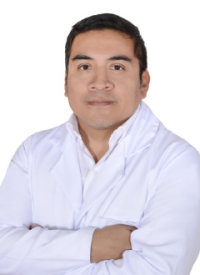
Dr. Ricardo Taipe Mallqui, MD, MSc, is a Thoracic Surgeon at the Hospital Nacional Guillermo Almenara Irigoyen (HNGAI) in Lima, Peru, and the current President of the Peruvian Association of Thoracic Surgery (APECTOR). He obtained his medical degree with honors from the Universidad Nacional Mayor de San Marcos (UNMSM) in 2013 and completed his residency in Cardiothoracic Surgery in 2019 at HNGAI. He holds a Master’s degree in health teaching and research from UNMSM and continued with postgraduate studies in Biostatistics at the Universidad Peruana Cayetano Heredia (UPCH). In 2024, he specialized in minimally invasive thoracic surgery and robotic surgery at the Hospital Israelita Albert Einstein in São Paulo, Brazil. His main research interests focus on thoracic oncology, complex airway stenosis, and minimally invasive thoracic surgery. Currently, he is a member of the IASLC Academy and leads oncological research projects at his institution, promoting scientific production within Peruvian public health sector. Follow him on LinkedIn and ResearchGate.
In Dr. Mallqui’s opinion, beyond technical expertise and methodological rigor, an author in the medical field must possess a profound capacity for self-criticism, intellectual honesty, and frustration tolerance. Likewise, teamwork and the ability to guide new generations of medical residents in health research are fundamental.
To mitigate bias, Dr. Mallqui highlights that it is essential to combine the responsible conduct of research with strict methodological planning, a solid design and analytical plan, and adherence to international reporting guidelines, all backed by a hospital ethics committee evaluation. Above all, maintaining scientific neutrality is vital: reporting findings as they are and letting the evidence speak for itself.
“My motivation to write stems from a conviction: ‘Surgery without research is routine; surgery with research is advancement.’ In our local context, there is a pressing need to generate our own evidence on thoracic pathologies that reflects our hospital reality. Seeing the effort invested in a manuscript being translated into an optimized treatment standard for the patient's benefit, the mentorship of residents motivated to investigate, or the international recognition of Peruvian thoracic surgery, is the greatest reward,” says Dr. Mallqui.
(by Brad Li, Masaki Lo)